

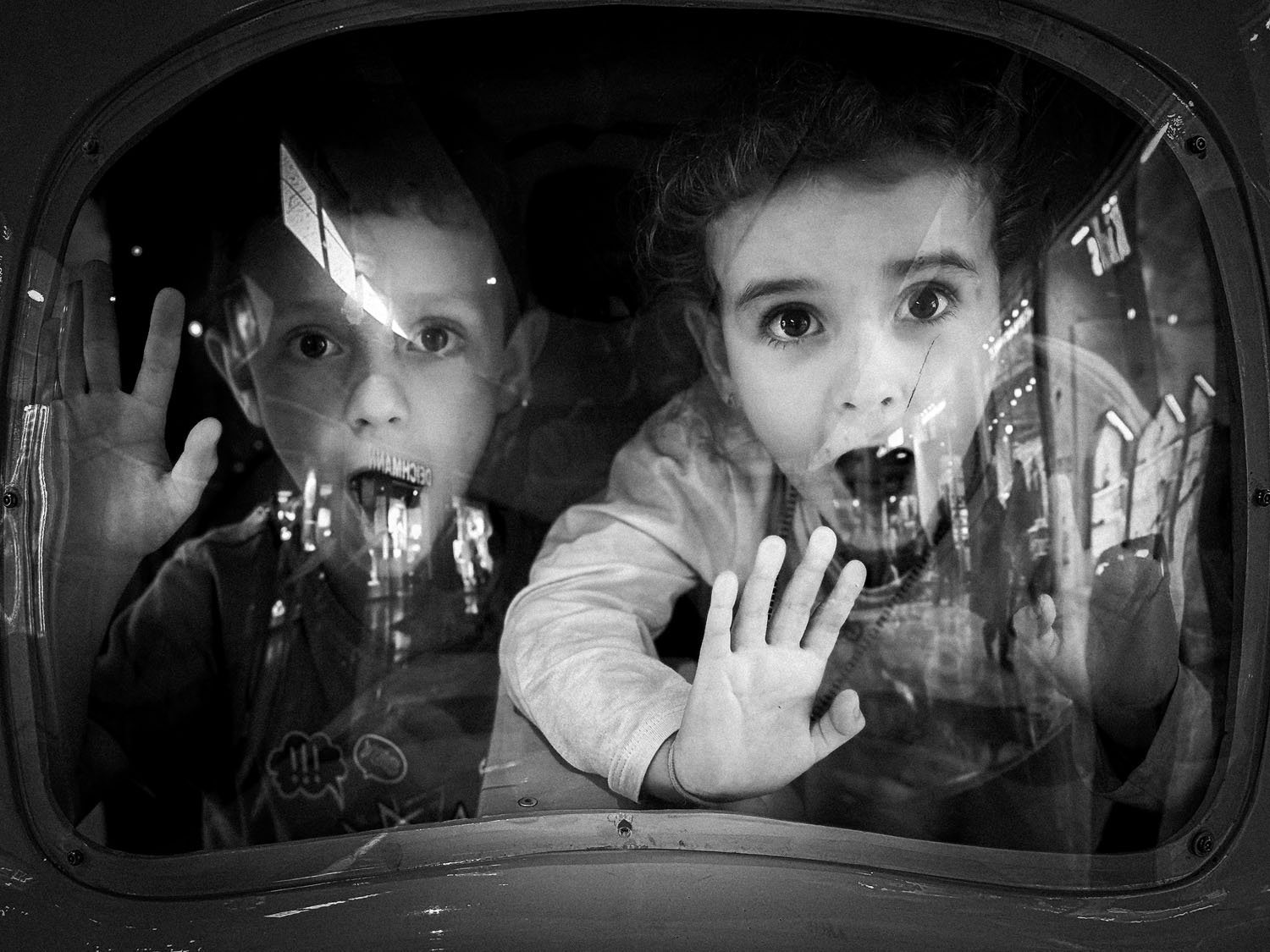
Hello Rúben, thank you very much for this opportunity to learn more about you and your outstanding work. To begin, can you tell us how your interest in photography started and what your first camera was?
My interest in photography started in a very natural way, almost without realizing it. More than ten years ago, I picked up my father’s Nikon D3200, and what began as simple curiosity quickly turned into something much deeper. At first, it was just about learning how the camera worked, but over time, I became more interested in what I could express through it. That camera was my entry point, but more importantly, it taught me to observe—something that has stayed with me regardless of the gear I use today.

Could you speak about the role photography plays in your life, particularly how you use your camera to document your daily life, the people around you, and the places you visit?
Photography has become a way of understanding and organizing my life. I’m a father of three, and that naturally shapes the way I photograph. My camera is not just a tool for creating images—it’s a way of preserving moments that would otherwise disappear in the routine of daily life.
I document my surroundings constantly: my family, everyday scenes, places I visit. Over time, this has evolved into a kind of visual diary. What interests me is not just the big moments, but the small, quiet ones—the gestures, the light falling in a certain way, the unnoticed details. Photography allows me to give value to those moments.

Do you tend to carry a camera with you every day, or only when you deliberately go out to take photographs?
I almost always carry a camera with me. If it’s not one of my dedicated cameras, it’s my phone. I don’t really separate “going out to take photos” from daily life anymore. For me, photography happens in between things—in walks, while being with my kids, or simply moving through a place.
That said, there are moments when I go out more intentionally, especially for street photography, but even then, I try to keep the same mindset: staying open rather than forcing images.

When you are out, what kinds of things usually catch your attention and trigger you to take a photograph?
Light is usually the first thing that catches my attention. More specifically, contrast—how light and shadow interact within a scene. I’m drawn to strong compositions, but often they come from very simple situations: a person crossing a shadow, a textured wall, a moment of isolation in a busy environment.
I also look for emotion or tension, even subtle ones. Sometimes it’s in body language, sometimes in the relationship between elements in the frame. Over time, I’ve learned to trust that instinct rather than overthink it.

Could you tell us more about your preference for high contrast scenes and the use of strong shadows in your work?
My preference for high contrast and strong shadows comes from a fascination with reduction—stripping an image down to its essential elements. By working in black and white, and especially with high contrast, I can remove distractions and focus on form, texture, and structure.
Shadows are not just an absence of light for me; they’re an active element in the composition. They create depth, rhythm, and sometimes even narrative. I like images that feel graphic but still retain a sense of reality. High contrast helps me achieve that balance.

What subjects do you most enjoy photographing, from street photography to more personal projects, such as documenting your family?
Street photography and family photography are probably the two pillars of my work, even though they might seem very different. Street photography gives me unpredictability and challenge—it forces me to react and adapt.
On the other hand, photographing my family is something much more intimate and long-term. It’s less about a single image and more about building a body of work over time. In both cases, though, I’m looking for authenticity—something real that goes beyond the surface.
Nature also plays an important role, especially where I live in Cantabria. It offers a different pace and a different kind of observation, but still connects with my interest in light and texture.


What cameras and lenses are you currently using, regardless of brand?
At the moment, I use a mix of cameras depending on the situation. My main monochrome cameras are the Leica Q2 Monochrom and the Ricoh GR IV Monochrome, which I use extensively for black and white work.
Alongside those, I also use APS-C cameras like the Fuji X-E4 and the Ricoh GR IV. And of course, I always carry my iPhone, currently the iPhone 17 Pro, which I shoot in RAW and often keep in a monochrome profile as well.
In terms of lenses, I mostly stick to fixed focal lengths, especially in the 28mm to 35mm range.

Focusing on a few of the cameras you use most often, what would you say are their main advantages and disadvantages?
The Leica Q2 Monochrom offers incredible image quality and tonal depth, especially in black and white. It has a very particular rendering that I find hard to replicate elsewhere. Its limitation is also part of its strength: the fixed 28mm lens forces you to commit.
The Ricoh GR IV Monochrome is probably the camera I carry the most. It’s discreet, fast, and extremely capable. Its biggest advantage is portability—you can always have it with you. The downside is that it’s more limited ergonomically and in terms of battery life.
The Fuji X-E4 gives me more flexibility, especially when I want interchangeable lenses, but I tend to keep my setups simple to maintain consistency in my work.


RIGHT: Leica Q2 Mono . Summilux 28mmF1.7 . F/4.0 . 1/200″ . ISO 1600
Why do you prefer primes over zoom lenses?
Prime lenses simplify the process. They remove decisions, and that helps me focus more on the scene rather than on technical choices.
They also encourage consistency. Over time, you start to “see” in a specific focal length, which helps build a more coherent visual language. For the kind of photography I do—especially street and everyday life—that consistency is very important.
Do you have a favourite focal length, and what draws you to it?
I feel most comfortable around 28mm. It gives me a balance between context and subject. You can get close and still include the environment, which is essential for the kind of storytelling I’m interested in.
It also creates a certain dynamism in the frame, especially when working with strong lines and shadows. It’s a focal length that invites you to be part of the scene rather than observing it from a distance.


RIGHT: Ricoh GR IV . @18.30mm . F/2.8 . 1/20″ . ISO 5000
What software do you use to organise your library and edit your photographs, and what do you typically look for when processing an image?
I mainly use Lightroom to organize and edit my work. My editing process is quite focused: I’m not trying to transform the image, but to reinforce what was already there.
When processing, I look for contrast, structure, and tonal balance. In black and white, small adjustments can completely change the image, so I try to be precise. Texture is also very important to me, so I pay close attention to how details are rendered.
Ultimately, the goal is to maintain a consistent visual identity across my work.

To conclude, thank you once again for your time. For those who may be interested, where can our readers purchase the presets you have created?
Thank you—it’s been a pleasure. My presets are available on rubenbenitophotography.com, and they are designed to reflect the way I approach black and white photography, especially in terms of contrast and tonal control.
They’re not meant to be a shortcut, but rather a starting point that helps photographers develop their own vision while maintaining a strong and consistent look.


The post A personal language in Black and White – Interview with Rubén Benito appeared first on Fuji X Passion.