

Introduce yourself and tell us how photography came into your life. Where did the journey begin?
My name is Srikanth Ravada, and I’m a freelance photographer from India. Photography has been part of my life for as long as I can remember. When I was a child, my father owned a film camera and would often take photographs during family outings. Sometimes he would hand the camera to me and teach me simple things like composition and framing. Those moments sparked my curiosity, and without realizing it, photography became something I genuinely loved.
As I grew older, I started taking photos with my mobile phone, capturing anything that caught my attention. Eventually, I bought my Fujifilm X-T4, and that was a turning point. It encouraged me to slow down, observe more carefully, and become more intentional with every photograph I made.
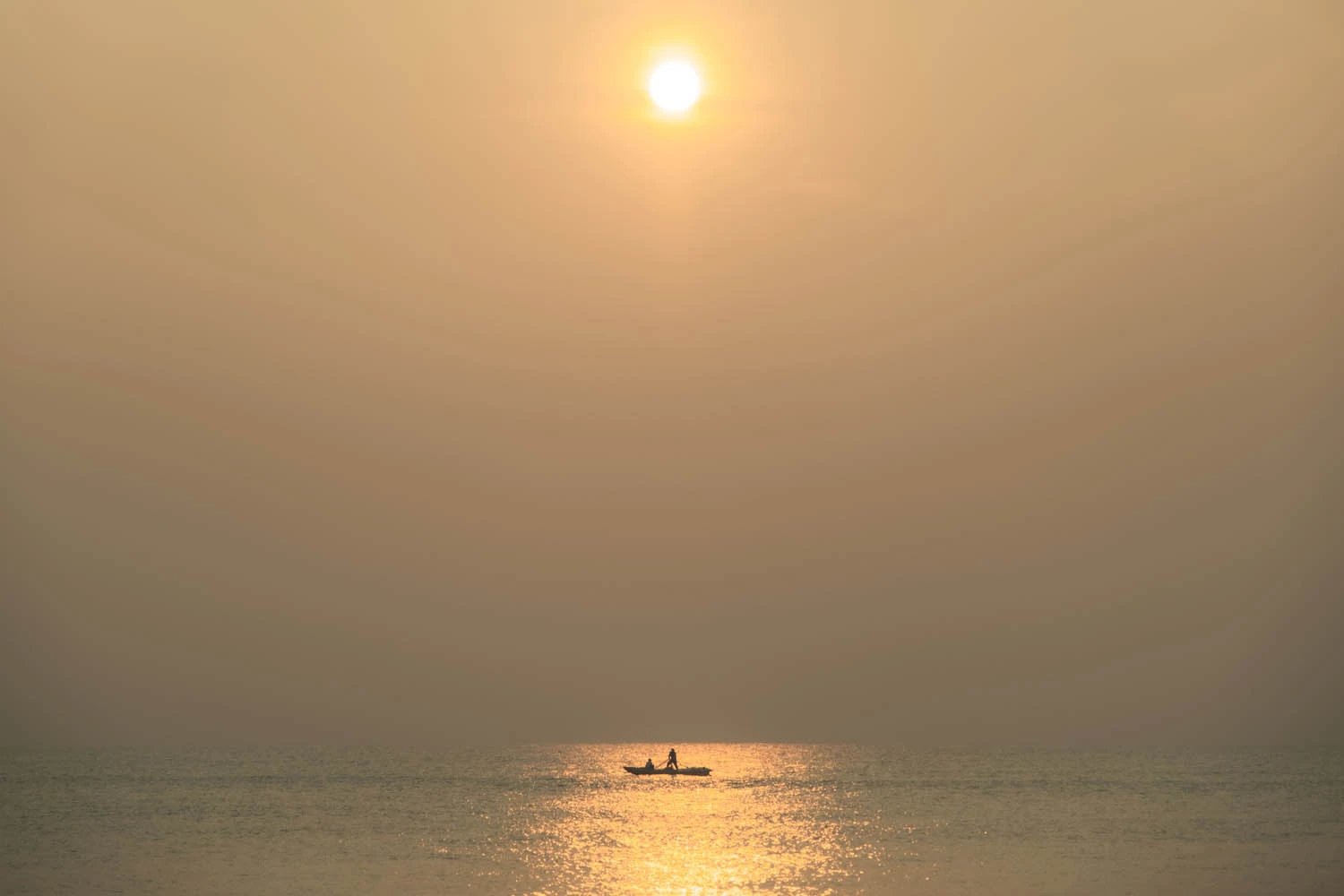
Most weekends, I head to the beach or explore quiet places with my camera. I am naturally drawn toward landscapes and minimal photography, but over time my curiosity has led me into documentary work as well. My ongoing project, Tides of Labor, follows the daily lives of fishermen along the Indian coast, capturing their resilience and the quiet relationship they share with the sea.
For me, photography is much more than making beautiful images. It’s about paying attention, finding stories in ordinary moments, and creating photographs that make people pause, feel, and look a little longer.


How would you describe your photographic style today, and how has it changed over the years?
Today, I would describe my photography as a blend of landscape, minimal, and documentary storytelling. I’m drawn to simple compositions, natural light, and scenes that evoke emotion without needing much explanation. I enjoy creating photographs that encourage people to pause and observe details they might otherwise overlook.
When I first started, I was mainly interested in making beautiful landscape photographs. My focus was on composition, light, and finding visually pleasing scenes. Over time, I realized that the images that stayed with me the longest were the ones that told a story. That realization changed the way I photograph.
Now, before pressing the shutter, I ask myself what the image is saying rather than just how it looks. This shift led me to projects like Tides of Labor, where I document the lives of fishermen and their relationship with the sea. While I still love landscapes and minimalism, I now see them as tools for storytelling rather than simply creating aesthetically pleasing images.
I think my photography has become more patient and intentional. Instead of chasing dramatic moments, I prefer to spend time observing, understanding my surroundings, and waiting for genuine moments to unfold naturally. That approach has helped me create photographs that feel more honest and meaningful.


Which photographers have shaped the way you see, and what exactly did you take from them?
Michael Shainblum inspired my love for landscape photography. His work taught me that a landscape is more than just a beautiful view. Through his use of light, weather, and composition, I learned the importance of patience and planning. Watching his work encouraged me to slow down, revisit locations, and wait for the right moment rather than settle for the first image I could make.
Raghu Rai influenced me in a completely different way. His photographs showed me that the most powerful images are often found in ordinary life. He has an incredible ability to capture emotion, culture, and human connection with honesty and respect. Looking at his work made me realize that photography isn’t only about creating visually appealing images; it’s also about telling meaningful stories and preserving moments that matter.
Together, they have shaped the way I photograph today. Michael taught me to appreciate light, atmosphere, and composition, while Raghu Rai taught me to look beyond aesthetics and focus on people, emotion, and storytelling. I try to bring both of those influences into my own work, creating photographs that are visually simple but emotionally meaningful.
If someone could see only one of your photographs, which would you choose to represent your work — and why that one?
If I had to choose just one photograph, it would be the image of a fisherman resting on the shore while another boat returns from a long night at sea in the background.
I would choose this photograph because it represents the direction my photography has taken. At first glance, it looks like a quiet coastal scene, but the more time you spend with it, the more the story unfolds. The fisherman in the foreground is taking a brief moment to rest before beginning his own work, while behind him another crew is finishing theirs. It captures two different moments in the same cycle of labor, connected by the sea.

I went to the beach that day hoping to photograph landscapes, but instead I found myself drawn to the lives of the fishermen. Watching them work, wait, and return from the sea made me realize that the most meaningful photographs are often found in ordinary moments.
For me, the image is about more than fishing. It speaks about patience, resilience, and the quiet routines that often go unnoticed. It combines the simplicity of landscape photography with the emotional depth of documentary storytelling, which is exactly how I hope my work is seen today.
Which area of photography best describes your work?
Landscape Photography.
What first drew you to landscape photography, and what keeps pulling you back out into the field?
Landscape photography was the reason I fell in love with photography. I spend most weekends exploring beaches, where I’m drawn to changing light, open spaces, and simple compositions that create a sense of calm. What keeps bringing me back is that no two mornings are ever the same. Every visit offers a new mood, a different story, and another opportunity to see familiar places with fresh eyes.


How much planning goes into one of your trips, and where do you deliberately leave room for chance?
I usually do some basic planning before a trip by checking the weather, sunrise time, tides, and choosing a location. Beyond that, I try not to plan too much because some of my favorite photographs have come from unexpected moments rather than the scene I originally went looking for. For example, I often head to the beach intending to photograph landscapes, but I stay open to whatever unfolds around me. Leaving room for chance has led me to some of my most meaningful images.
When you arrive at a location, what do you look for before making your first photograph?
Before I take my first photograph, I spend a few minutes simply observing. I look at how the light falls across the scene, the direction of the shadows, and how different elements come together in the frame. I also watch how people or nature interact with the space, because sometimes the best photograph appears only after waiting patiently. Taking time to observe helps me create images that feel more thoughtful and genuine.
Which kind of light do you find yourself chasing, and why does it move you?
I’m most drawn to the soft light of sunrise. It brings a sense of calm and creates gentle tones that work beautifully with the minimalist scenes I enjoy photographing. Morning light also transforms familiar places, making every visit feel different. It encourages me to slow down, observe, and wait for moments that feel quiet and genuine.


What turns a technically good landscape photograph into one people actually remember?
I think a memorable landscape photograph is about more than technical perfection. Good light and composition can capture attention, but it’s emotion or a story that makes someone come back to the image. Even a simple scene can become meaningful if it creates a feeling or encourages the viewer to pause and look a little longer. That’s what I try to achieve in my own work.
What camera and lenses are at the heart of your kit right now, and what makes them right for the way you work?
My main camera is the Fujifilm X-T4, paired most often with the XF 16-80mm f/4 and the XF 35mm f/2. The 16-80mm is my go-to lens because it’s versatile enough for landscapes, seascapes, and documentary work without needing to change lenses often. When I want a simpler, more intimate perspective, I switch to the 35mm f/2. Together, this setup is lightweight, reliable, and lets me focus on observing and telling stories rather than worrying about my gear.
Which Film Simulation, colour profile or custom camera settings do you keep coming back to, and why do they suit the way you see?
I find myself returning to Classic Chrome and Classic Negative most often. Classic Chrome gives me muted colors and subtle contrast that work beautifully for documentary scenes and quiet landscapes, while Classic Negative adds a touch more character and depth without feeling overly saturated. Both simulations complement the minimalist way I like to photograph, allowing me to focus on mood, light, and storytelling rather than heavy editing afterwards.
What keeps you working with the Fuji X system, and what would you miss most if you switched away from it?
What keeps me with the Fuji X system is how enjoyable it makes the entire process of photography. The tactile dials, compact design, and excellent color science encourage me to slow down and be more intentional with every frame. I also love the Film Simulations because they often give me a look that’s very close to what I envisioned in camera. If I ever switched away, I’d miss the shooting experience the most. Fujifilm makes photography feel less about the equipment and more about seeing and enjoying the moment.


Walk us through your editing workflow — which software do you use, and how much of the final image is made after the shutter closes?
I use Adobe Lightroom Classic for almost all of my editing. My workflow is fairly simple. I start by selecting the strongest images, then make subtle adjustments to exposure, contrast, white balance, and color while staying true to the scene I experienced. I don’t believe in heavily manipulating my photographs. Most of the final image is created in the field through careful observation, composition, and waiting for the right light, while editing is simply there to enhance what was already captured.
What are you usually trying to achieve in post-processing — and what do you deliberately leave untouched?
In post-processing, my goal is to enhance the mood of the scene without changing its authenticity. I mainly adjust exposure, contrast, highlights, shadows, and colors to match what I experienced when I took the photograph. I deliberately avoid heavy manipulation or adding and removing elements because I want my images to remain honest. I believe the strongest photographs are created in the moment, with editing simply helping to present that moment more clearly.
If you could leave a single piece of photographic wisdom for someone picking up a camera today, what would it be?
Don’t worry about having the best camera or chasing every trend. Spend more time observing than shooting, and let curiosity guide you. A photograph becomes meaningful when it tells a story or makes someone feel something, not because it’s technically perfect. Be patient, keep practicing, and never stop seeing the world with fresh eyes.
Looking back, what is the most valuable lesson photography has taught you?
The most valuable lesson photography has taught me is patience. Some of my favorite photographs didn’t happen because I planned them perfectly, but because I stayed a little longer, observed more carefully, and waited for the right moment. Photography has also taught me to appreciate the beauty in ordinary things that many people walk past every day. It has changed the way I see the world, making me more attentive, curious, and grateful for the quiet moments that often go unnoticed.


Which single accessory could you not work without — and what would you lose without it?
The one accessory I couldn’t work without is my tripod. Many of my photographs are made during sunrise, in fog, or in low light, where stability is essential for getting the image I envision. Beyond the technical side, a tripod slows me down and encourages me to think more carefully about composition before pressing the shutter. Without it, I’d lose both the precision and the patience that have become an important part of the way I photograph.
How has your relationship with gear changed over the years, and what drove those changes?
When I first started, I believed better gear would automatically lead to better photographs. Over time, I realized that observation, patience, and understanding light matter far more than owning the latest equipment. Today, I keep my kit simple with the Fujifilm X-T4 and two lenses that cover almost everything I photograph. That change has allowed me to spend less time thinking about gear and more time focusing on the story and the moment in front of me.
What are you working on right now, and where can readers follow it?
Right now, I’m continuing to work on a long-term documentary project about the lives of fishermen along the Indian coastline. I’m also exploring new landscape and minimalist photographs during my weekend trips, always looking for quiet moments and stories that often go unnoticed. Readers can follow my journey and latest work on Instagram: @srikanth_ravadaa.
The post Stories Shaped by Sea and Light – Interview with Srikanth Ravada appeared first on Fuji X Passion.