

Hi, my name is Jon Harrison, and I have had a long obsession with photography. This started as a teenager, using film cameras to learn the basic elements of photography. Completely self-taught, I still use analogue equipment along side my Fujifilm digital gear. I love most forms of photography, but it’s black & white that is top of my list.
My Fujifilm cameras are usually set to mono, as initially I like to see how subjects work in shade, contrast and form, rather than distracting colour. It feels almost alien reverting the viewfinder back to colour! Although I don’t have a darkroom, I develop mono film at home, digitising the negatives with a camera or my Epson flatbed scanner.
Now 62, I live in North Tolsta, a village on the Isle of Lewis, Outer Hebrides. Retired, I have had many jobs, including wedding/portrait photographer and camera store manager. Apart from photography, I enjoy watercolour painting, pen & ink drawing, reading and being out in the natural world.
I have always enjoyed nature and the landscape, so photography was the obvious way of documenting my passion. Landscape photography was my first love, however as I’m getting older, I have come to enjoy many different aspects of photography.


RIGHT: Fuji GFX50S II . Fuji GF35-70mmF4.5-5.6 @49.10mm . F/16 . 30″ . ISO 100
Still-life is for me one of the most rewarding genres, not only is there need to grab observers’ attention, you have to convey your creation, your eye as it were, the whole process is yours from start to finish. This vision determines whether an image works or not. Although there is often a minimalist element to my work, I tend to capture this in a classical style, putting my own (sometimes quirky) emphasis on it. For example, since moving to the Outer Hebrides in 2024, I have used sea-shells, beach finds and plants found near by. The elements within my still-life studies will usually be past their best, perhaps decaying like dying flowers. I feel this gives a certain graphical edginess, more texture, more real life to the image. It will also give the image a greater sense of ‘place’. Perfect examples of neatly arranged flowers appearing almost ‘too good’ is definitely not my style, it can be too clinical for my taste.
I like to keep my process simple. I use available window light controlled with blinds, a 3-Legged-Thing tripod, reflector, a fairly small rustic table and a couple of cloth backdrops.


RIGHT: Fuji GFX50S II . Fuji GF35-70mmF4.5-5.6 @43.30mm . F/16 . 30″ . ISO 100

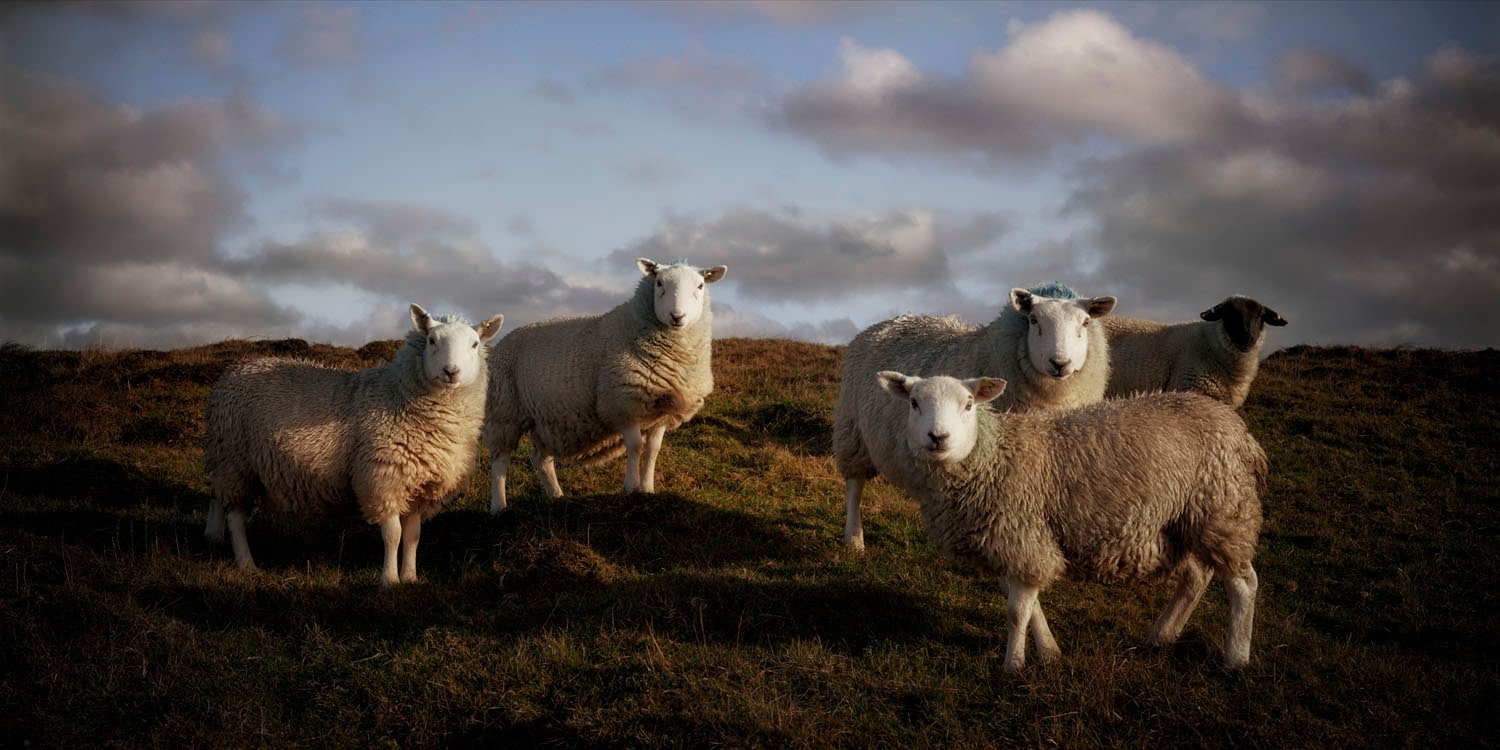
Of course moving to these islands off Scotland’s west coast meant new landscapes to discover. Although the Islands of Lewis and Harris have separate identities, they are in fact a single island. Lewis, with its rugged peat moorland hills to the north, with the more mountainous Harris in the south. There are stunning locations and beautiful beaches throughout the islands. It continues to be an absolute pleasure discovering these gorgeous lands. The islands are blessed with stunning light, which literally can change in the blink of an eye. Wall to wall sunshine is something we rarely have to deal with.


RIGHT: Fuji X-T3. Fuji XF100-400mmF4.5-5.6 @226.60mm . F/18 . 1/25″ . ISO 160


RIGHT: Fuji GFX50S II . Fuji GF35-70mmF4.5-5.6 @35mm . F/22 . 120″ . ISO 100

Also, I don’t limit myself to the ‘golden hour’ or ‘blue hour’ as the changeable weather can produce stunning conditions throughout the day all year round.
As mentioned, I love black & white and will often use ND filters in my work to convey a sense of movement within the image. This technique is especially suited to the many lochs and small fishing harbours to be found. Being alone, totally immersed in the surroundings and keeping my own timescale is hugely beneficial. This must result from being a bit of a ‘loner’ and happy in my own company for most of my life.
I just feel & work better alone.


RIGHT: Fuji GFX50S II . Fuji GF35-70mmF4.5-5.6 @70mm . F/32 . 60″ . ISO 100


RIGHT: Fuji X-T3. Fuji XF100-400mmF4.5-5.6 @100mm . F/11 . 1/1500″ . ISO 160
Having used many cameras, both film and digital, I became a Fuji owner in 2014 with the launch of the excellent X-T1+ XF18-55mm, a camera I still regularly use. Previously using Nikon D series cameras since 2005, including the period covering weddings. In 2012, I sold this gear, and I briefly went micro 4/3 with a Panasonic GX-1 kit. Although greatly reduced in size & weight, I felt restricted creatively with this set-up.
Having done some research into Fuji and the new X-T1, I knew this was the camera for me. To be fair, I would have bought it on looks alone! Added to the very good 18-55 kit lens, was the stunningly sharp XF14mm f2.8 as a landscape option. It was the best kit I’d ever used at that point in time.


RIGHT: Fuji GFX50S II . Fuji GF35-70mmF4.5-5.6 @35mm . F/9 . 1/40″ . ISO 250


RIGHT: Fuji GFX50S II . Fuji GF35-70mmF4.5-5.6 @35mm . F/26 . 120″ . ISO 100

Next purchase was an X-M1 with the small but brilliant XF18mm f2, a Fuji-branded bag, plus memory card. It was a fantastic offer costing barely more than the 18mm lens on its own. I used this combination to take to work whilst out as a delivery driver around the beautiful Yorkshire countryside. Around this time, I added the XC50-230mm lens for extra reach. Obviously there is no aperture ring, and its virtually an all plastic construction, however the optical quality cannot be faulted.
Although the X-M1 was a great little camera, I did miss a viewfinder, so traded the body against a new X-T10.


RIGHT: Fuji GFX50S II . Fuji GF35-70mmF4.5-5.6 @35mm . F/11 . 1/25″ . ISO 500


RIGHT: Fuji X-T3. Fuji XF100-400mmF4.5-5.6 @400mm . F/11 . 1/320″ . ISO 200


RIGHT: Fuji X-T3. Fuji XF100-400mmF4.5-5.6 @334.90mm . F/8 . 1/110″ . ISO 1000

The kit I’d put together lasted for about six years before I decided I needed more pixels and a better all-round spec. In 2020 a shiny new X-T3 was added to my gear. I was becoming increasingly interested in bird photography, so splashed out on a XF100-400mm with 1.4x converter. Due to Covid restrictions, we had to stay home, so we were lucky having a large garden with a wide variety of visiting birds, so I spent a good deal of time with this new set-up.
The latest additions to my Fuji Gear came in 2024. I was sixty that year, so I treated myself to a GFX 50SII + GF35-70mm kit. As it was being phased out, another brilliant offer by Fuji saw camera and lens at the same price as ‘body only’ had been previously. The dynamic range is awesome, I no longer bother bracketing! The first time I saw a GFX file on big screen was a real ‘Wow’ moment, the quality is simply outstanding. So, for my style of photography, the GFX 50SII is near perfect. Later in the year I would add the fabulous GF100-200mm lens.


RIGHT: Fuji GFX50S II . 480″ . ISO 800
I’ve used Mac for over twenty years, currently Mac mini with M4 chips and a 27” BENQ photo monitor. Mac feels better for my image processing workflow than PC, and appears a lot less ‘buggy’.
As I shoot a lot of b&w, I use fine JPG (acros simulations) alongside raw. I put the raw files through the Fuji variant of Capture One (it has Fuji’s film simulations). I do basic exposure editing here. Saved as Tiffs, the files are then opened in Affinity Photo for further refining edits. This also gives me plug-in access to the brilliant Nik collection suite, which I find especially suited for my still-life & mono work.


RIGHT: Fuji GFX50S II . Fuji GF35-70mmF4.5-5.6 @35mm . F/29 . 1/18″ . ISO 100


RIGHT: Fuji GFX50S II . Fuji GF35-70mmF4.5-5.6 @41.10mm . F/29 . 1/180″ . ISO 800


RIGHT:


RIGHT: Fuji X-T10. Fuji XF18mmF2 . F/10 . 1/40″ . ISO 200


RIGHT: Fuji GFX50S II . Fuji GF35-70mmF4.5-5.6 @35mm . F/22 . 1.3″ . ISO 100


RIGHT: Fuji GFX50S II . Fuji GF35-70mmF4.5-5.6 @70mm . F/8 . 1/300″ . ISO 100
The post Photography in my new island home appeared first on Fuji X Passion.